What Is the Personal Year in Numerology and How to Calculate It

Numerology proposes that each person goes through nine-year cycles, where each year has a specific purpose and energy. These cycles, known as personal years, reflect different stages of personal evolution and help us understand what kind of experiences, challenges, and opportunities will be most present during certain periods.
In this article, we explore what the personal year means, how to calculate it correctly, and how to use it as a guide for personal and spiritual growth.
Table of Contents
- What Is the Personal Year in Numerology?
- How to Calculate Your Personal Year Step by Step
- Characteristics of Personal Years From 1 to 9
- The 9-Year Cycle and Its Influence on Your Life Path
- How to Use Your Personal Year to Grow Spiritually
What Is the Personal Year in Numerology?
The personal year in numerology is a number that indicates which energy predominates between one birthday and the next. Each personal year is associated with specific themes such as beginnings, growth, changes, or closures. Through this tool, it’s possible to understand what kind of experiences will be most present and how to respond to them more consciously.
These years are organized into a cycle of nine stages numbered from 1 to 9. Each number reflects a different phase of personal evolution, and knowing your personal year allows you to identify where you are in the cycle and what types of decisions are most favorable. Some years encourage you to start new projects, others to strengthen relationships, and others to let go of what has already served its purpose.
It is important to know that the personal year does not begin on January 1st, but on the day of each person’s birthday. From that moment, a new energy is activated that accompanies you during the following twelve months, setting the tone for the experiences that will unfold during that period.
In the episode dedicated to numerology in the series The Other Side, available on Gaia, there is an in-depth exploration of how numbers, and particularly the date of birth, can offer insights into who we are and how we navigate each stage of life. This perspective allows for a deeper understanding of the meaning of numerological cycles and their impact on our personal journey.
How to Calculate Your Personal Year Step by Step
The calculation of the personal year is based on adding the day and month of birth with the year you want to analyze. Unlike the life path number, which considers the complete date of birth, here you only use the day, the month, and the current year. Everything is added together and then reduced to a single digit between 1 and 9.
Let’s look at an example:
If you were born on June 7 and want to know your personal year for 2026:
7 (day) + 6 (month) + 2 + 0 + 2 + 6 (year) = 23
2 + 3 = 5
Your personal year would be 5.
Another example:
Date of birth: November 15
You want to know your personal year for 2026:
1 + 5 + 1 + 1 + 2 + 0 + 2 + 6 = 18
1 + 8 = 9
Your personal year would be 9.
Remember that this number begins to influence you from your birthday, and not from January first. So if you were born in November, you will remain in your previous personal year until your birthday.
Characteristics of Personal Years From 1 to 9
Each personal year is part of a nine-year cycle that reflects different phases of personal evolution. Each number represents a specific energy that sets the tone of the year, indicating what kind of experiences, challenges, and opportunities will be most present. Knowing this information allows you to make more conscious decisions and live more in tune with the moment you are going through.
-
Personal Year 1
It is a year of beginnings, independence, and renewal. It encourages you to make firm decisions, start new projects, and leave behind what no longer fits in this new stage. The energy is focused on the self: who you are, what you want, and where you want to go. It’s a time to act with determination and plant the seeds that will bear fruit in the coming years.
-
Personal Year 2
This year requires sensitivity, patience, and openness to dialogue. It’s a stage for strengthening bonds, cooperating with others, and resolving conflicts harmoniously. It’s not about moving forward quickly, but about observing, listening, and building from emotional connection. Intuition and empathy will be great allies during this period.
-
Personal Year 3
It is a year to express yourself, communicate, and enjoy life with lightness. The energy supports creativity, art, social relationships, and anything that allows you to share what you carry inside. It’s a time to release accumulated tension and recover your enthusiasm. It’s also a good stage for developing new talents.
-
Personal Year 4
The energy of this year is focused on consistent work, organization, and building solid foundations. It’s a time to set priorities, take on responsibilities, and give concrete form to your plans. Although it may feel slower or more demanding, what you do now will be key for your future stability. The effort will yield lasting results.
-
Personal Year 5
It is a stage of changes, surprises, and expansion. This year brings movement, new opportunities, and the chance to break away from routines that no longer make sense. The key is to stay open to change without losing focus. Travel, unexpected learning experiences, and important decisions may arise suddenly.
-
Personal Year 6
This year invites you to care for your immediate environment, your loved ones, and your emotional responsibilities. It may involve important commitments at home, with family, or in close relationships. It’s a time to cultivate balance between giving and receiving. It may also be a stage of healing, whether personal or relational.
-
Personal Year 7
The energy of 7 is introspective, reflective, and spiritual. It’s not a time for impulsive action, but for pausing, questioning, and seeking deeper answers. You may feel the need for solitude, silence, or inner connection. Studying, meditating, or reviewing your purpose may be especially valuable during this period.
-
Personal Year 8
This year focuses on the material, the professional, and the exercise of personal power. It’s a stage of results, achievements, and important decisions that may impact your financial stability or long-term projection. The key is to act with responsibility and balance. If you use your energy wisely, this year can bring significant progress.
-
Personal Year 9
The 9 represents the closing of a cycle. It’s a time to let go, forgive, and release what has already fulfilled its purpose. This energy supports introspection, gratitude, and preparation for what’s to come. You may feel emotions more intensely, but also gain greater clarity about what you no longer wish to carry forward.
The 9-Year Cycle and Its Influence on Your Life Path
Numerology teaches that life unfolds in nine-year cycles, each with a specific purpose. Throughout this journey, we go through stages of beginning, development, transformation, and closure. Understanding where you are within this cycle helps you align your decisions with the moment you are currently experiencing.
These cycles do not repeat in exactly the same way, but they do share an energetic structure that sets certain rhythms. For example, a year 1 is ideal for planting seeds, while a year 9 invites you to let go. Recognizing these patterns doesn’t mean predicting the future, but rather understanding the ground on which your experiences will unfold.
The nine-year cycle is not separate from your life path. On the contrary, the two complement and enhance each other. Your life path number reflects your essence, and the personal year indicates how that essence expresses itself in a particular stage. Observing both numbers gives you a more complete view of your growth process.
How to Use Your Personal Year to Grow Spiritually
The personal year is not only useful for making practical decisions; it can also be a tool for your spiritual evolution. Each number proposes a kind of learning that invites you to grow inwardly, release repetitive patterns, and connect with your life’s purpose. When you align with that energy, spiritual development flows more easily.
For example, in a year 7 you might dedicate more time to meditation or reflection; in a year 6, to working on self-love and service; in a year 1, to cultivating the confidence to move forward without fear. Each stage is an opportunity to look within and discover which part of yourself needs to be strengthened or transformed.
The key is to live each year with awareness. Instead of resisting what happens, you can observe what the energy of the personal year is showing you and use it as a guide. In this way, your spiritual path becomes more coherent, and each experience, no matter how simple it may seem, can become a step toward greater clarity and inner connection.
About the Author

Life Path Numbers: How To Calculate Them And What They Mean

The life path number is one of the most important elements in numerology for understanding who we are and what our purpose is. Based on your birth date, this number reveals key aspects of your personality, the challenges you may encounter, and the opportunities for growth throughout life.
In this article, we explore how to calculate your life path number and what it can reveal about your personality and your spiritual path.
Table of Contents
- What Is The Life Path Number In Numerology?
- How To Calculate Your Life Path Number
- Characteristics Of Each Life Path Number
- Master Numbers And Their Meaning
- How To Use Your Life Path Number For Spiritual Growth
What Is The Life Path Number In Numerology?
The life path number, also known as the life path or destiny path, represents the essence of your being and your deepest purpose. It is calculated from your date of birth and is considered the key to understanding the challenges and opportunities you will encounter throughout your life. Each number offers a different approach to living more fully and authentically.
Life path numbers help us identify patterns in our personality and discover talents we can develop. They also indicate how to overcome obstacles and make the most of the experiences that arise along our path. Knowing your life path number allows you to clearly see the energies that accompany you and how to align with them.
In the episode dedicated to numerology in the series The Other Side, available on Gaia, numerologist Kendal Milford explores how numbers and numerical patterns can offer insight into our personality and our life path. Through the analysis of birth dates, she shows how numerology can be used as a tool for self-knowledge to better understand who we are and how we move through the world.
How To Calculate Your Life Path Number
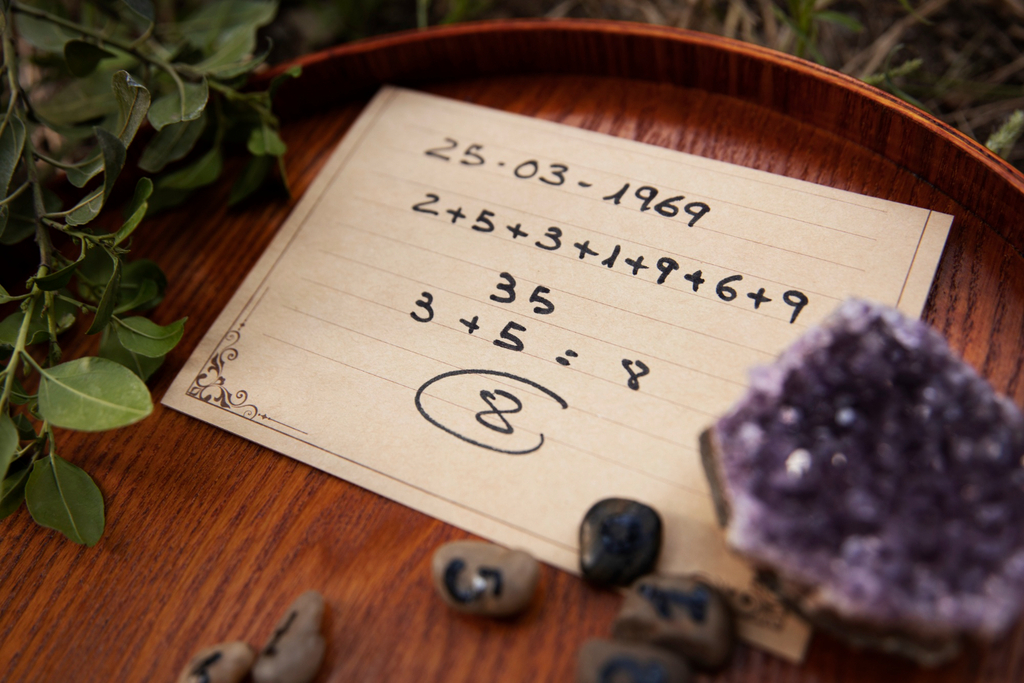
Calculating your life path number is a simple process that starts with your birth date. You only need to add all the digits until you obtain a single digit or a master number (11, 22 or 33).
For example, if you were born on July 12, 1984, the sum is:
1+2+7+1+9+8+4=32
Then, 3+2=5
The 5 will be your life path number.
If the result is a master number, it is not reduced further. For example, if you were born on June 7, 1991, the sum is:
7+6+1+9+9+1=33
33 is a master number, so it is not reduced further.
This number will be your main guide, revealing the natural talents you bring with you, the challenges you will face, and how you can evolve spiritually. Understanding how to calculate your life path is the first step toward connecting with your purpose and living with greater awareness and authenticity.
Characteristics Of Each Life Path Number
Each life path number offers a unique profile with specific qualities, challenges, and potentials. These numbers provide valuable clues about how we can develop our talents, face challenges, and find balance. Below, we explore the main characteristics of each life path number so you can better understand the energies that accompany you.
-
Life Path Number 1
The number 1 is associated with independence, ambition, and leadership. People with this number often have a strong desire to stand out and forge their own path. They are creative, original, and courageous, although they can sometimes be stubborn or impatient. Their main challenge is learning to work with others and maintaining balance between personal drive and collaboration.
-
Life Path Number 2
The number 2 represents harmony, cooperation, and sensitivity. Those with this number have a great ability to mediate and find balance in relationships, making them excellent diplomats. They are empathetic and possess a strong sense of justice, but they may tend toward indecision or rely too heavily on the opinions of others. Their challenge is to strengthen their self-esteem and trust their own decisions.
-
Life Path Number 3
The number 3 is related to creativity, communication, and artistic expression. These individuals easily connect with others and often stand out in fields that allow them to share their ideas and emotions. Their joy and optimism are contagious, although they may sometimes be scattered or inconsistent. The challenge is learning to focus their energy and give concrete form to their projects.
-
Life Path Number 4
The number 4 symbolizes discipline, stability, and responsibility. Those with this number are hardworking and practical, with a great ability to build solid foundations and long-term projects. Their perseverance and focus allow them to overcome obstacles, although they can sometimes be too rigid or fearful of change. Their learning lies in developing flexibility and openness to new possibilities.
-
Life Path Number 5
The number 5 is associated with freedom, adventure, and constant change. People with this number are usually curious, versatile, and enjoy exploring new experiences and cultures. They are excellent communicators and adapt easily, but they may have difficulty committing or establishing stable routines. Their challenge is learning to balance their desire for freedom with the need for responsibility and commitment.
-
Life Path Number 6
The number 6 symbolizes love, responsibility, and caring for others. Those with this number have a strong sense of family and community and are often generous and protective. They are excellent counselors and mediators, although they may become overly critical or sacrifice themselves excessively for others. Their challenge is maintaining balance between helping others and caring for their own well-being.
-
Life Path Number 7
The number 7 is linked to introspection, spirituality, and the search for truth. People with this number have an analytical mind and a deep curiosity about the mysteries of life. They enjoy solitude and continuous learning, although they may sometimes seem distant or overly critical. Their challenge is to open up emotionally and share their wisdom with the world.
-
Life Path Number 8
The number 8 represents power, ambition, and material manifestation. Those with this number are achievement-oriented and often stand out in professional or business environments. They are organized, determined, and have a strong sense of authority, but they can sometimes become overly controlling or rigid. Their learning lies in balancing material success with integrity and a higher purpose.
-
Life Path Number 9
The number 9 symbolizes compassion, humanitarianism, and selfless service. People with this number are called to help others and contribute to collective well-being. They are often generous, understanding, and creative, although they may feel frustrated if their efforts are not recognized. Their challenge is learning to release expectations and trust the natural flow of life.
Master Numbers And Their Meaning
Master numbers 11, 22, and 33 have a special energy in numerology, as they amplify the qualities of single-digit numbers and add a deeper spiritual dimension. They represent the potential for greater growth and higher consciousness, although they also involve greater responsibilities and challenges. These numbers are considered gateways to higher wisdom and a more transformative life purpose. Those who possess them have the opportunity to reach an exceptional level of fulfillment.
-
Life Path Number 11
Master number 11 is associated with intuition, inspiration, and spiritual connection. People with this number have a deep sense of purpose and are often visionaries, capable of guiding others toward new perspectives. However, they may experience inner tension and constant doubts due to the intensity of their energy. Their challenge is learning to balance their elevated vision with everyday reality and remain faithful to their purpose.
-
Life Path Number 22
Master number 22 represents the ability to materialize great ideals in the physical world. Those with this number possess practical skills and the vision to build projects with collective impact, becoming true spiritual architects. Their energy is powerful and requires commitment and discipline to achieve their goals. Their challenge is not losing sight of the balance between external success and the inner purpose that guides their actions.
-
Life Path Number 33
Master number 33 is linked to compassion, devotion, and large-scale healing. Those who have this number often possess a generous heart and a deep desire to help others, even beyond their immediate environment. They are natural spiritual teachers, but they may feel overwhelmed by the demands of such a high calling. Their learning lies in finding harmony and learning to nourish themselves while serving humanity.
How To Use Your Life Path Number For Spiritual Growth
Knowing your life path or destiny number is a fundamental step to better understand your gifts, your areas of growth, and the challenges you may encounter throughout your life. This knowledge allows you to see your behavioral patterns more clearly and the way you relate to yourself and to others. In this way, you can make more conscious decisions aligned with your true nature.
To make the most of this tool, it is helpful to reflect on the qualities and lessons your life path number offers you. You can use it as a guide to deepen your strengths and overcome the limitations that may arise. Dedicating time to meditation and practices that help you connect with yourself will allow you to better integrate the teachings that this number brings.
In addition, remember that the life path is not a fixed destination, but an invitation to explore your potential and grow spiritually. By honoring the characteristics and challenges that accompany your number, you can live with greater authenticity and purpose. With this understanding, it becomes easier to flow with life’s cycles and manifest a more harmonious and fulfilling existence.